Reimagining festival identity through movement and sound

UX/UI App & Branding
Project
Departure Fest
Role
UX/UI & Branding
Category
Music
Brand system
CHALLENGE
Music festivals often struggle to create a coherent identity that goes beyond visuals. While lineups change every year, many festivals lack a strong narrative or system capable of scaling across physical space, digital touchpoints, and user needs. Navigation, schedules, and information access are frequently confusing (especially in large open environments) resulting in frustration rather than immersion.
Set in the former Tempelhof Airport in Berlin, Departure Fest presented a unique opportunity: how to transform an iconic place of transit into a meaningful cultural experience, while designing a festival identity that feels dynamic, intuitive, and deeply connected to its location.
research
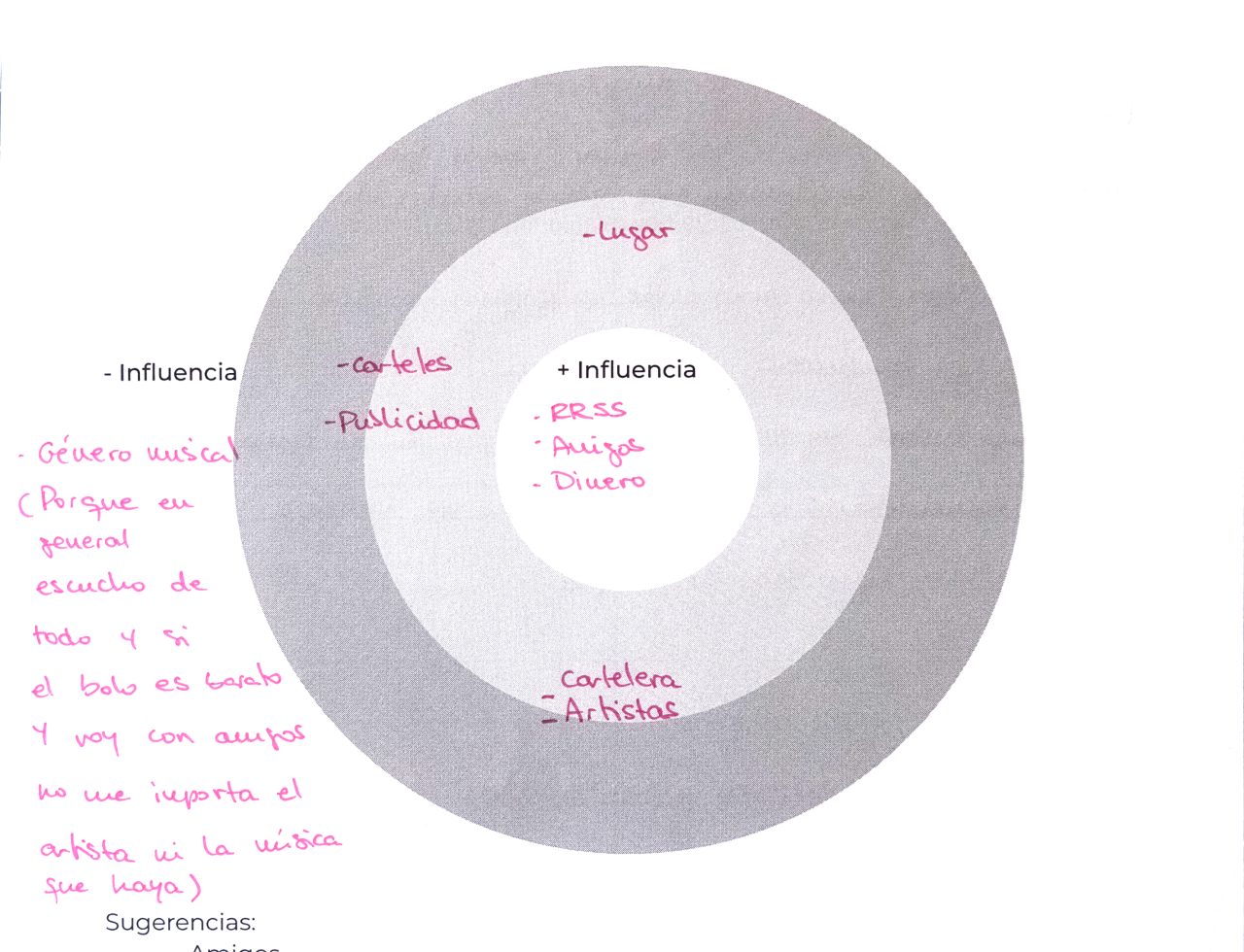
Research and questionnaires revealed that festival-goers value experience as much as music. Large-scale festivals often generate confusion around wayfinding, schedules, and real-time information, especially in expansive open spaces. Users rely heavily on their phones during festivals, yet most festival apps are cluttered, unintuitive, and fail to address real on-site needs. At the same time, the emotional dimension of festivals emerged strongly. Tempelhof’s airport setting amplified these emotions, highlighting travel as a powerful metaphor for musical exploration.
The airport context opened the door to reframe the festival as a journey. Travel metaphors (departures, destinations, routes) offered a natural framework for wayfinding, storytelling, and interaction. The opportunity was to design a flexible brand system that could guide users seamlessly across physical and digital spaces, while reinforcing a strong, memorable narrative rooted in movement and sound.
KEy goals
Create a scalable, concept-driven identity
Develop a strong visual system rooted in the airport context, capable of adapting across days, formats, and applications without losing coherence.
Improve navigation and access to information
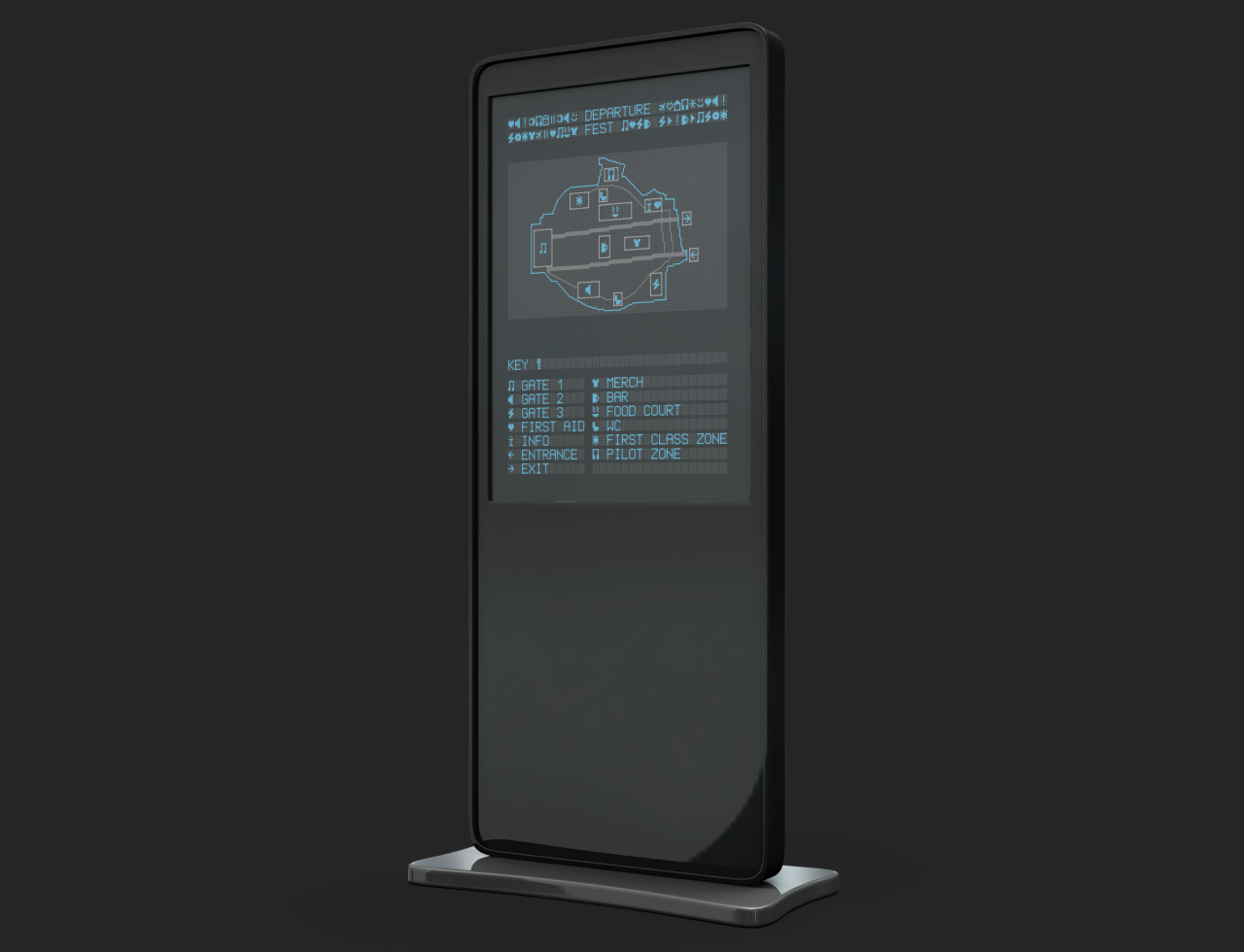
Design clear, intuitive tools (both physical and digital) that help users orient themselves, plan their experience, and move effortlessly through the festival.
Design an app that truly supports festival needs
Create a mobile experience that prioritises real user needs on-site, simplifying schedules, navigation, and access to essential information.
results
A flexible, airport-inspired visual identity
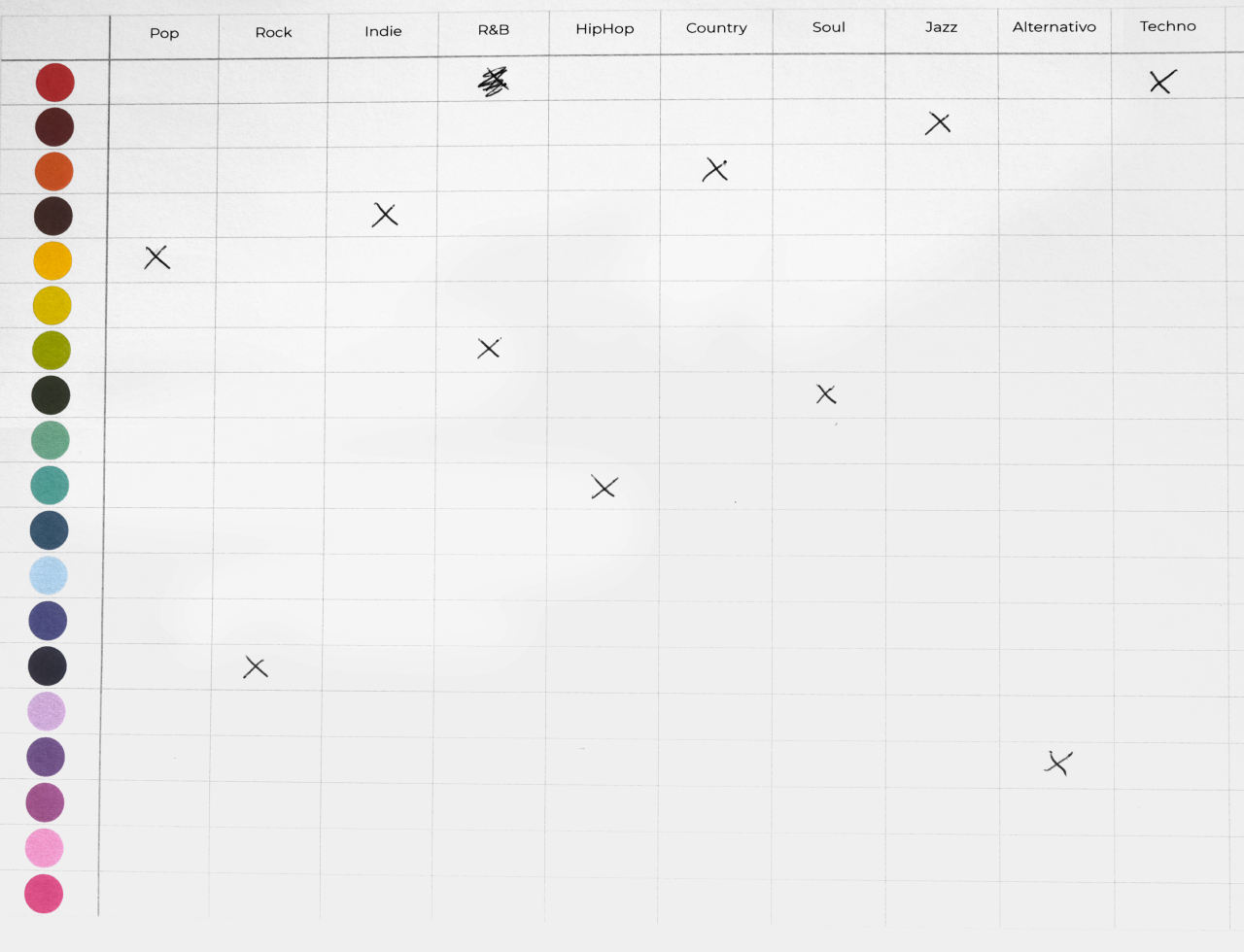
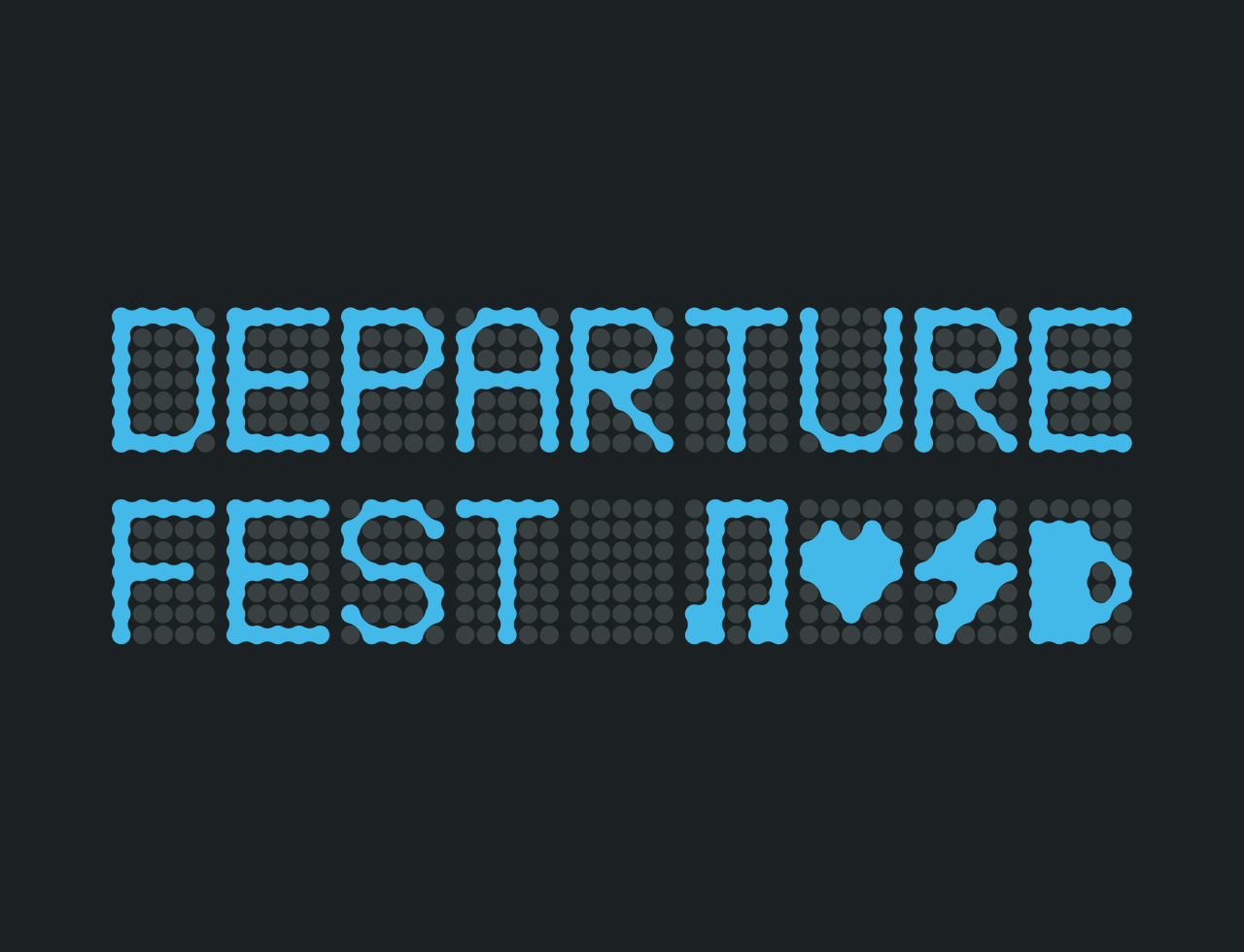
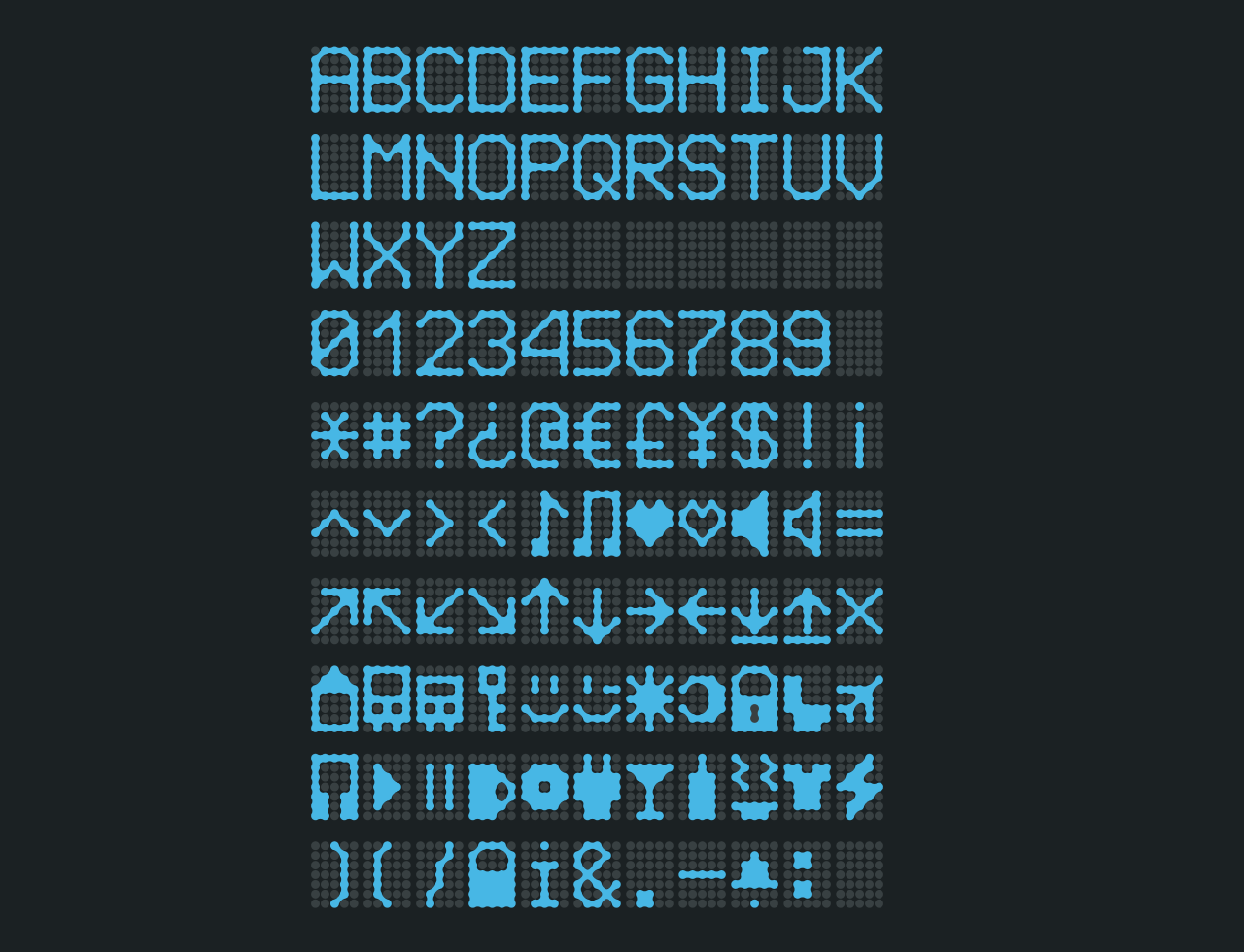
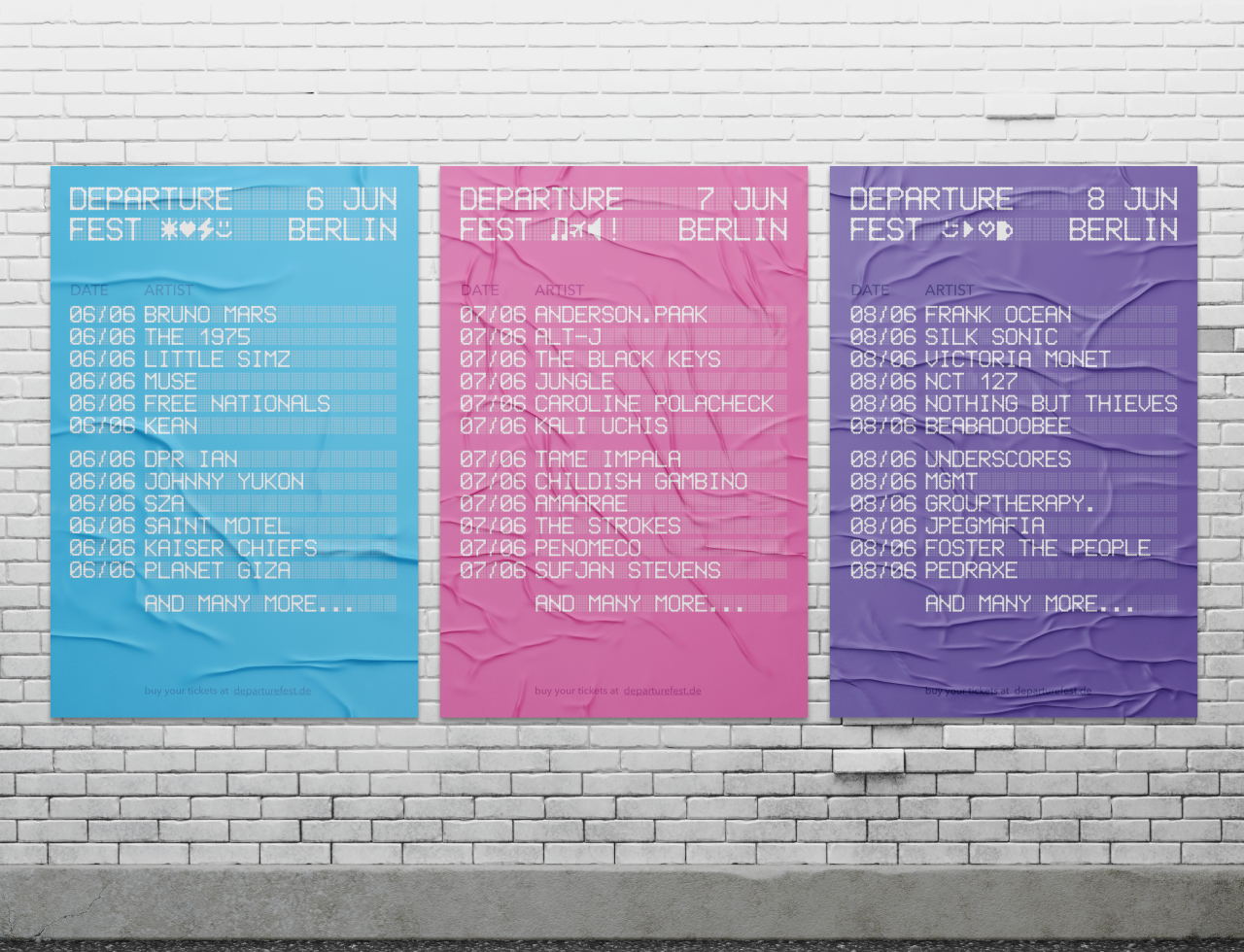
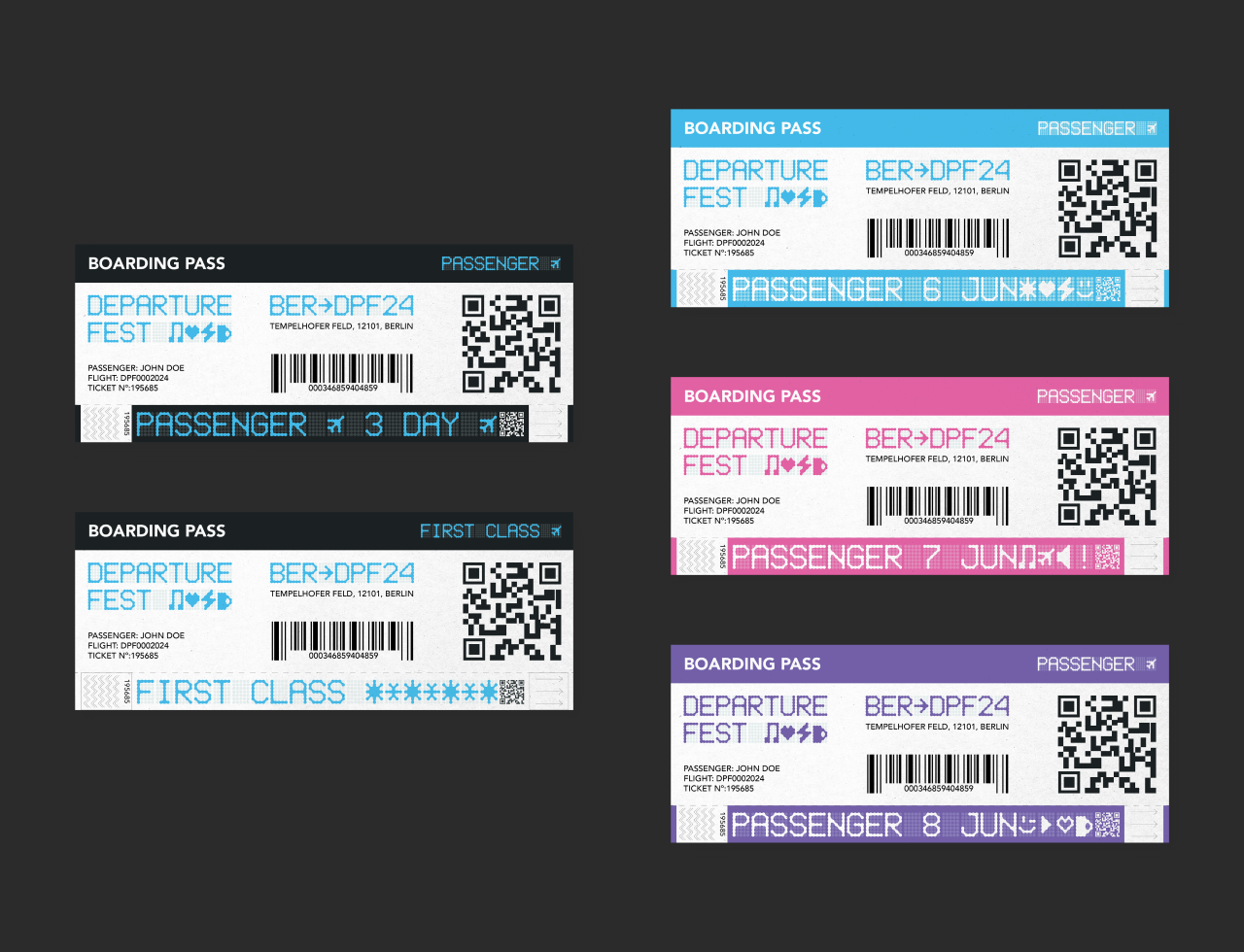
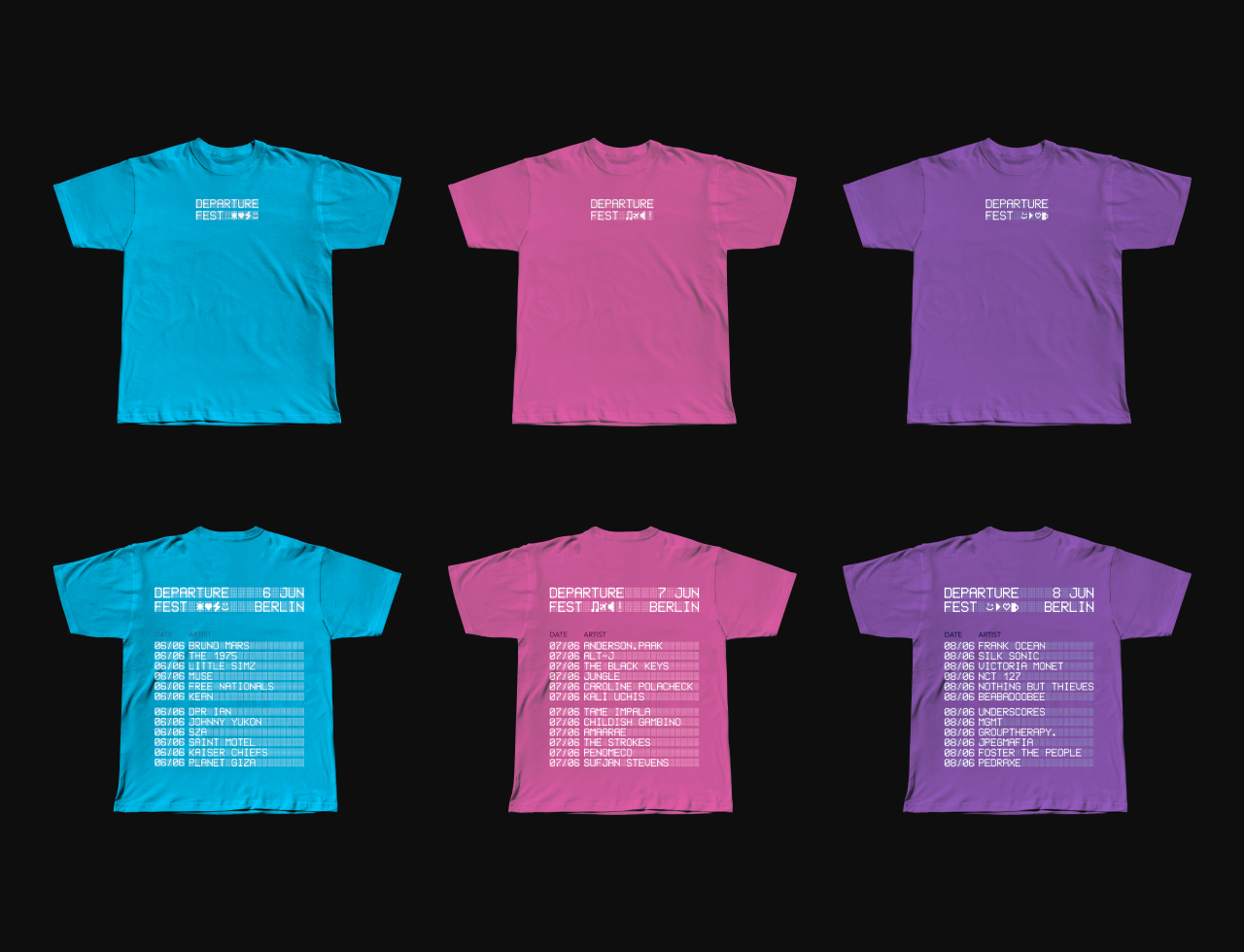
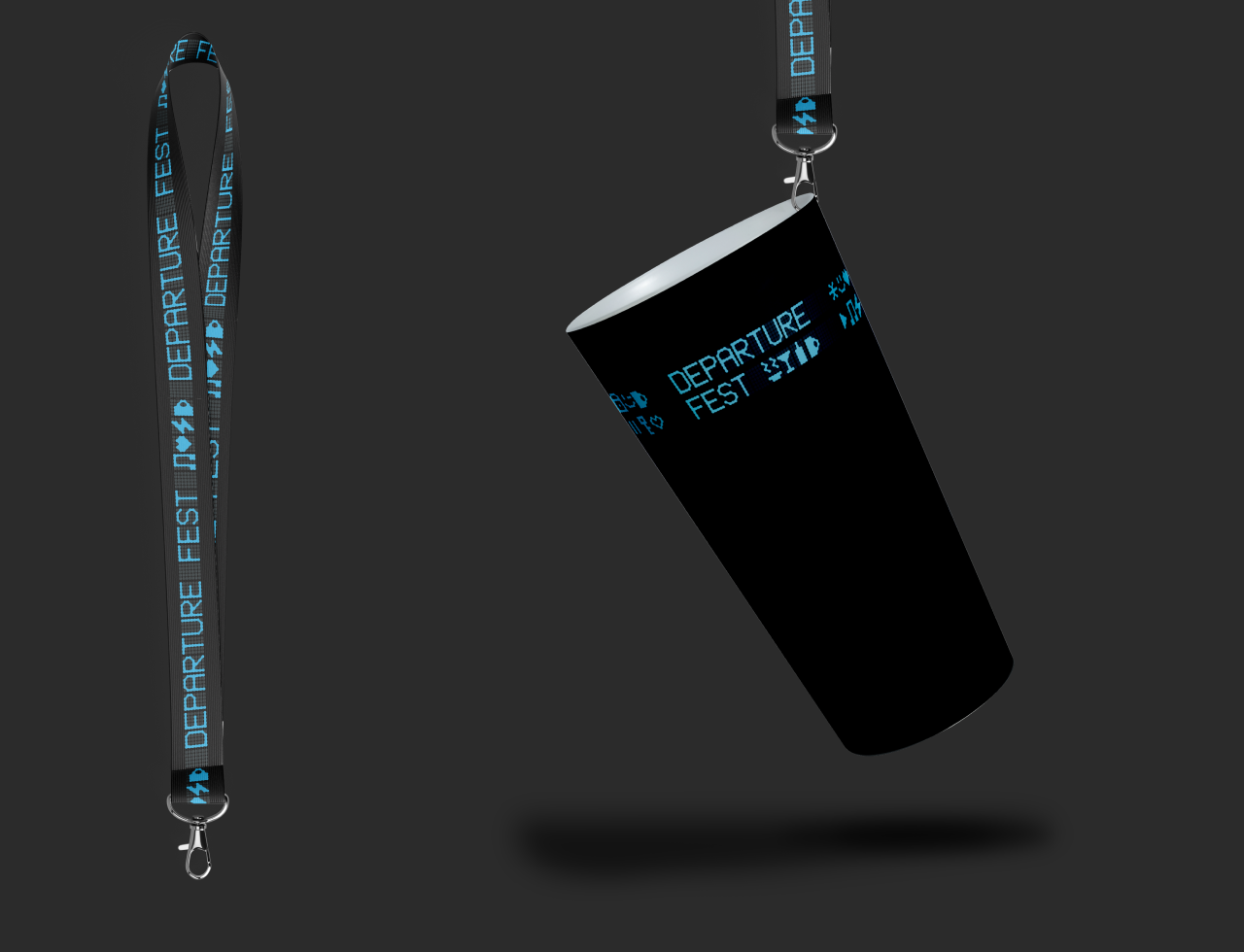
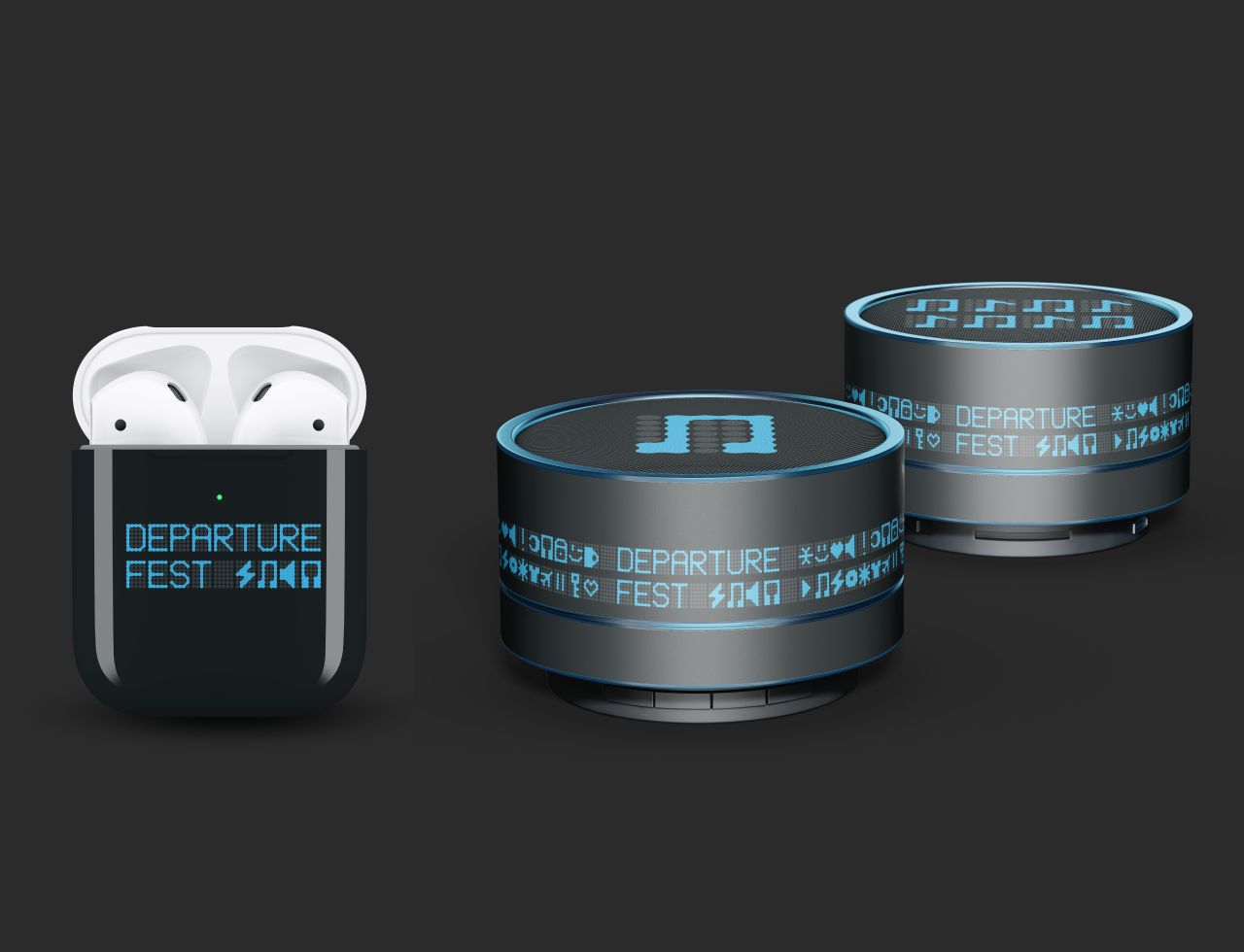
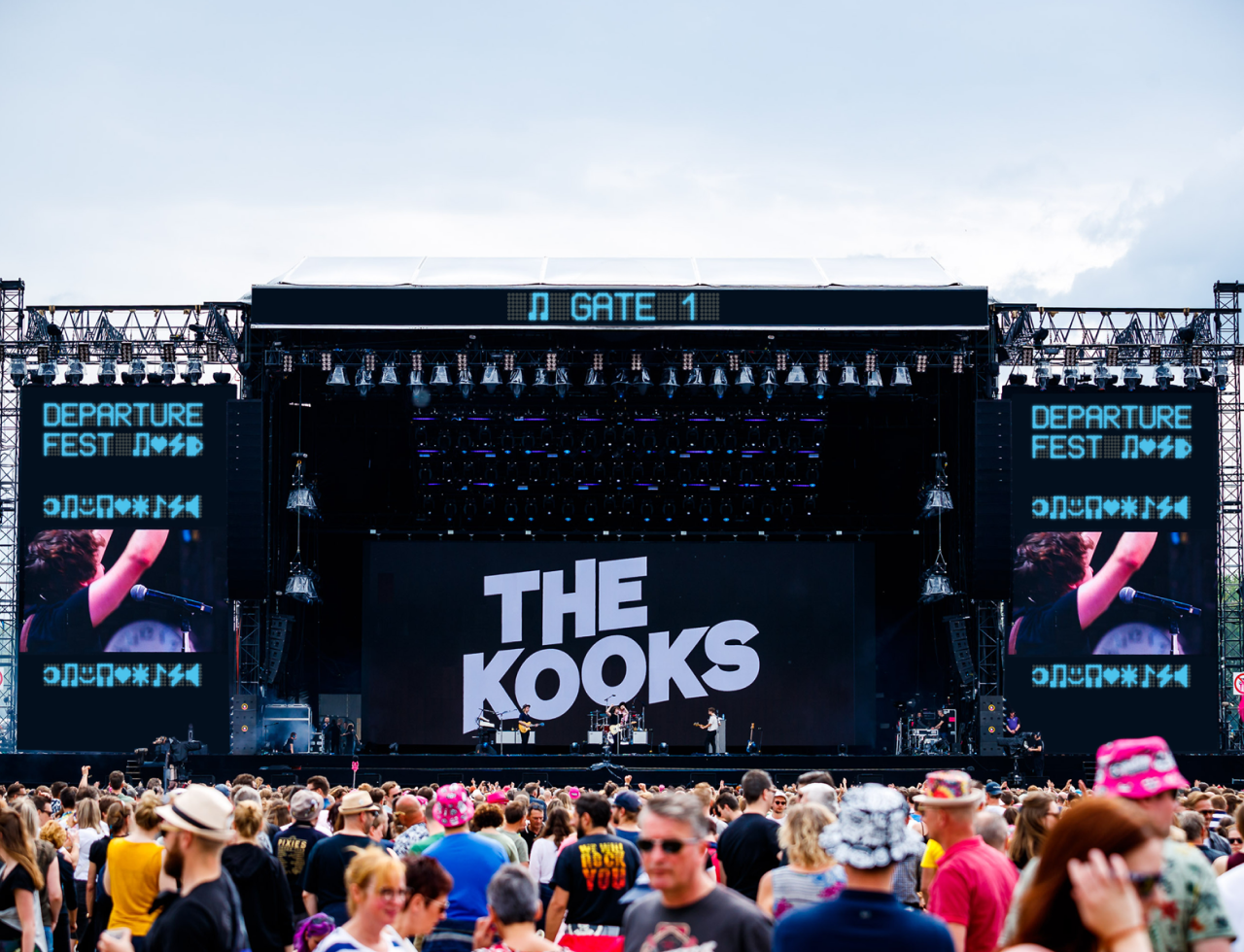
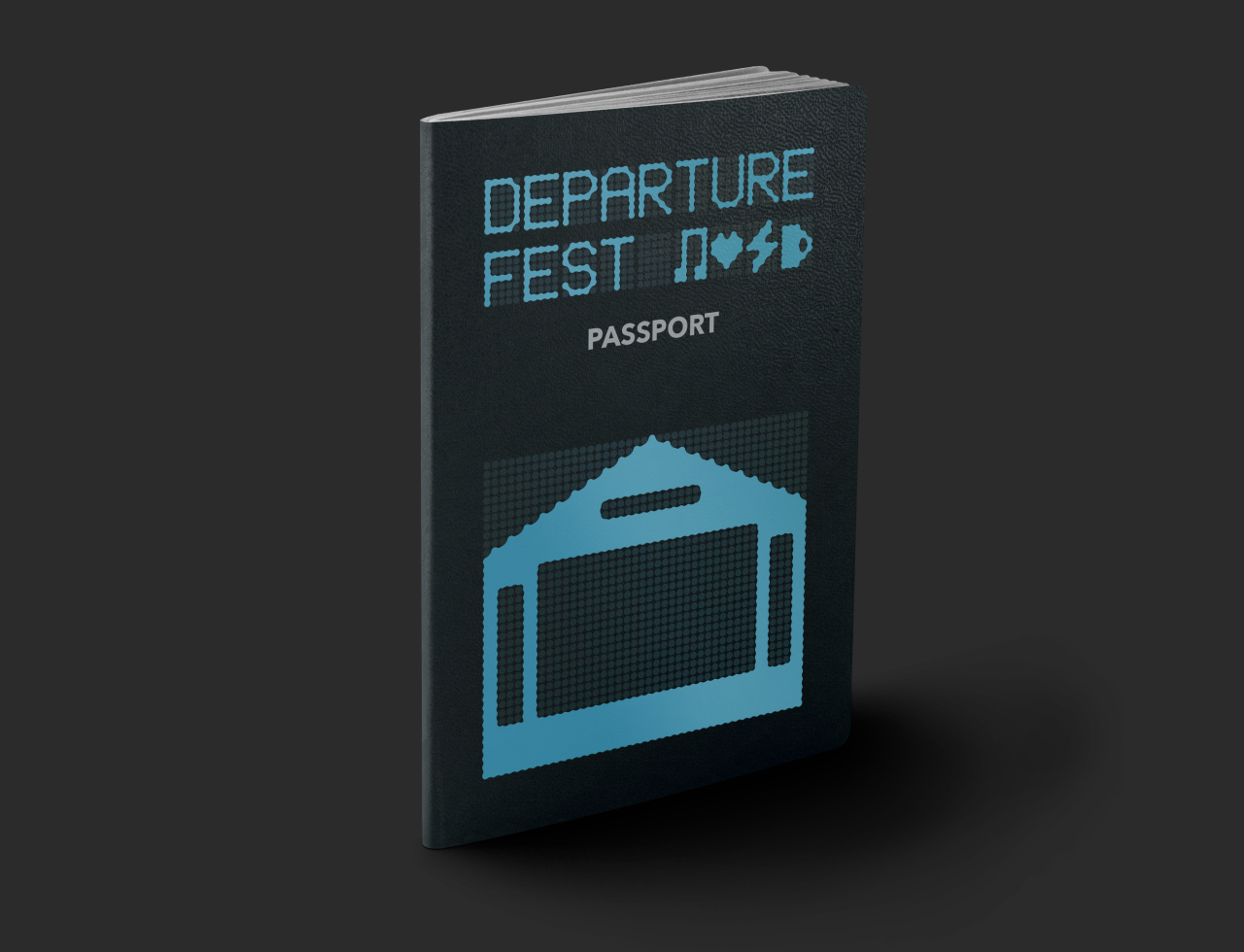
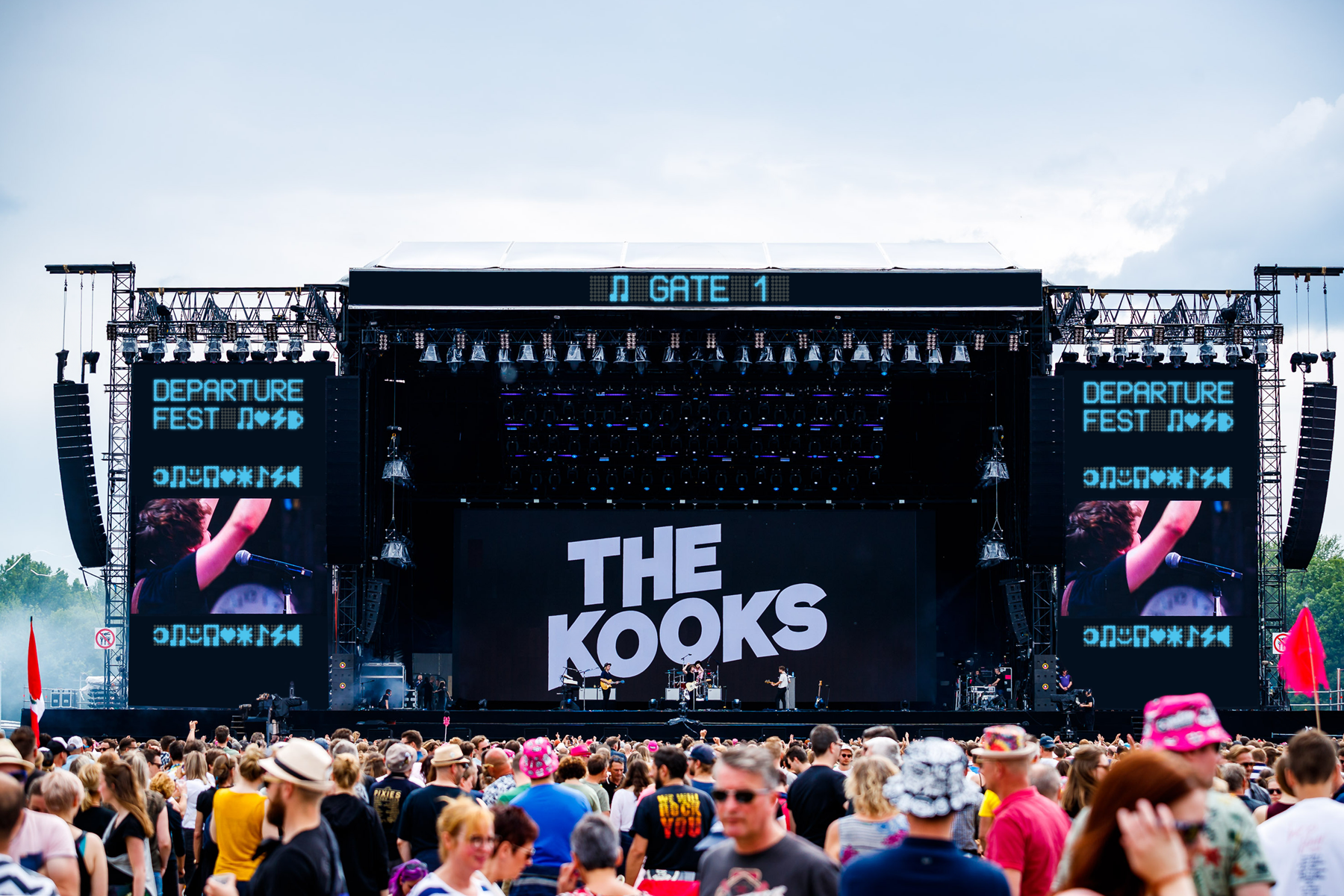
The identity is built around the visual language of airport LED panels and music visualisers, transforming sound into motion and rhythm. A variable logo system adapts depending on the application, while colour is used to differentiate days, reinforcing clarity and energy. The system is flexible by design, allowing it to scale across posters, tickets, passports, signage, and digital platforms.
Festival app as a core experience
The app was designed as an essential companion, not an afterthought. It offers a customisable schedule based on favourite artists, an interactive map, and direct access to tickets and key information. The interface prioritises clarity and speed, addressing common pain points found in existing festival apps and supporting users throughout the entire experience.
Physical touchpoints and wayfinding
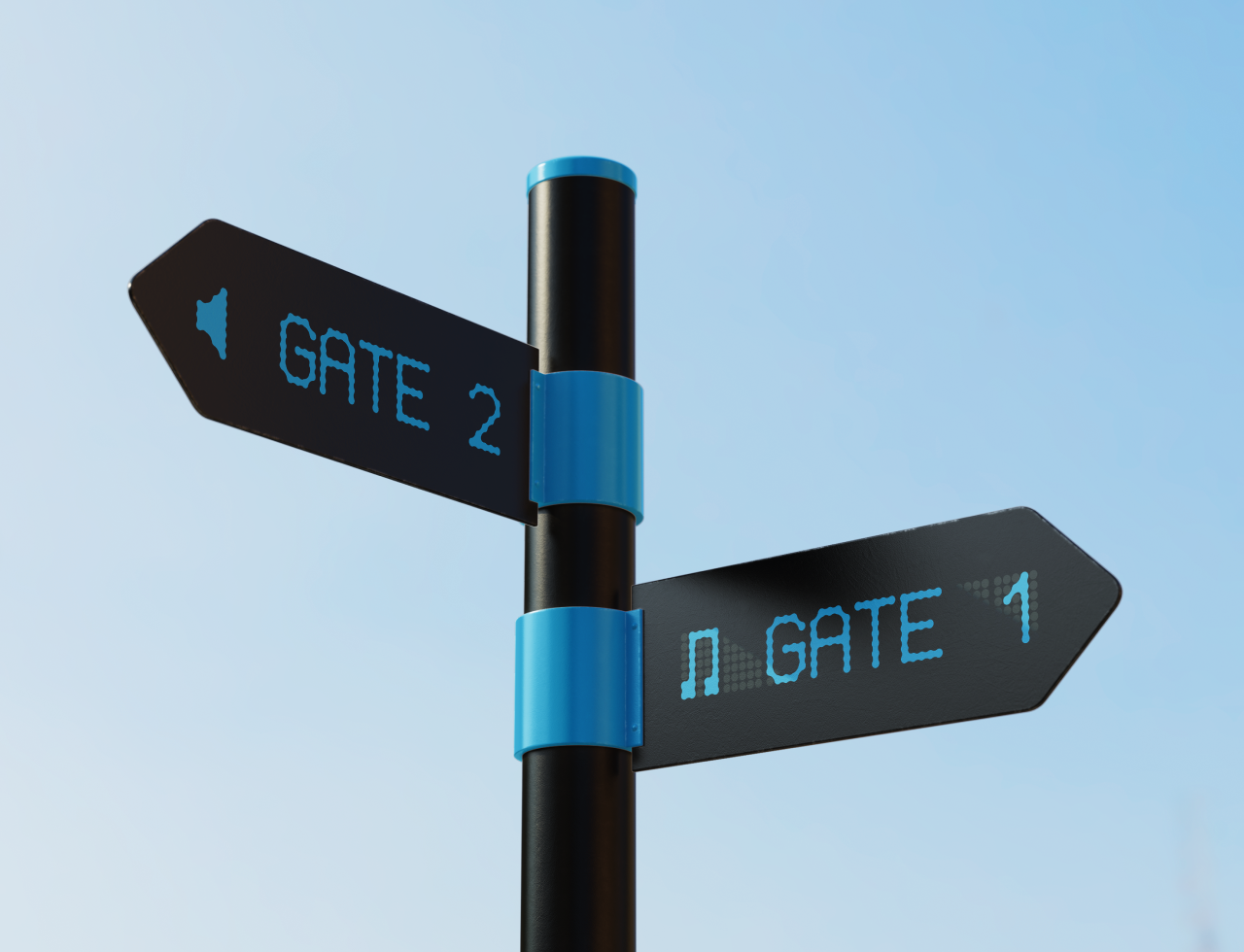
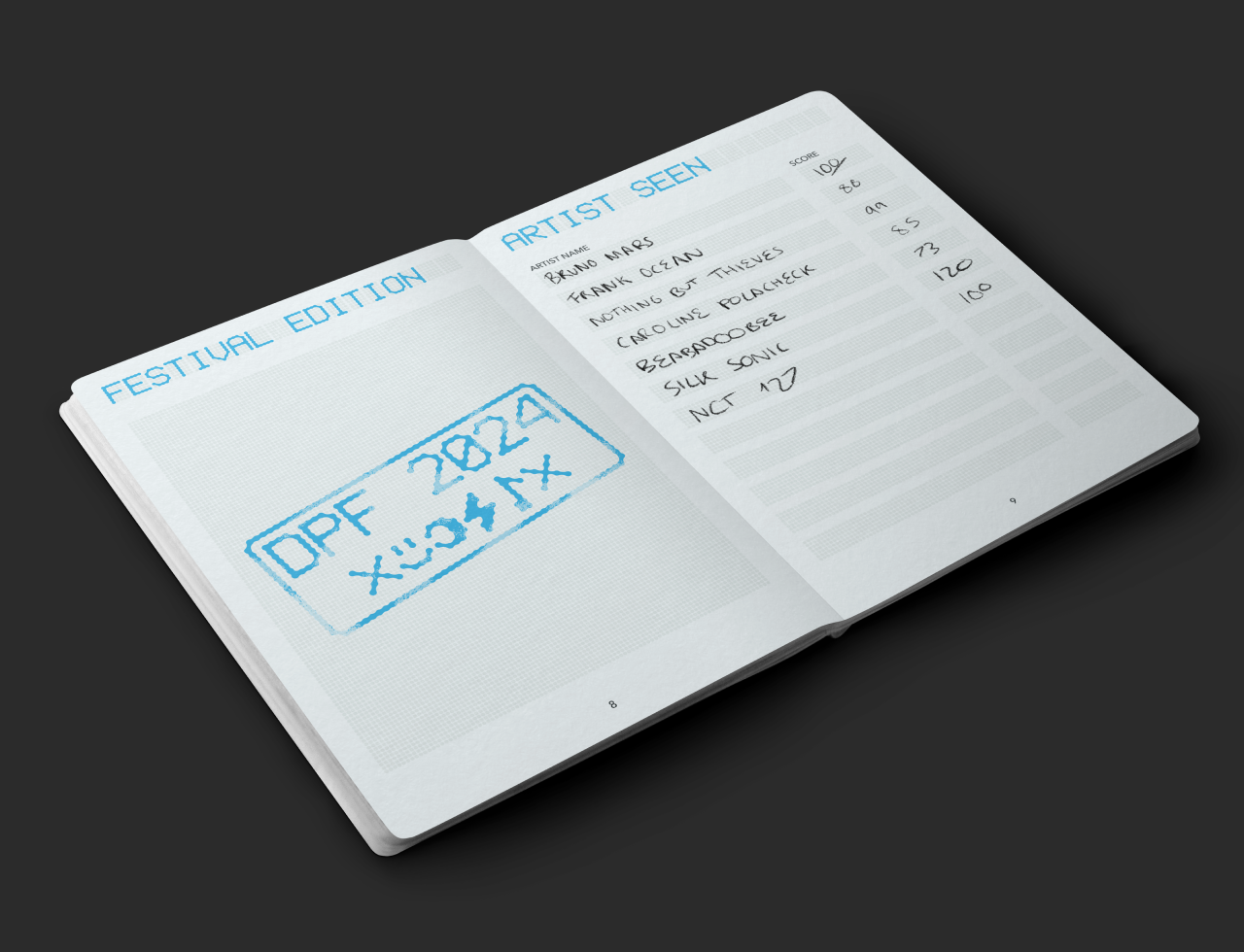
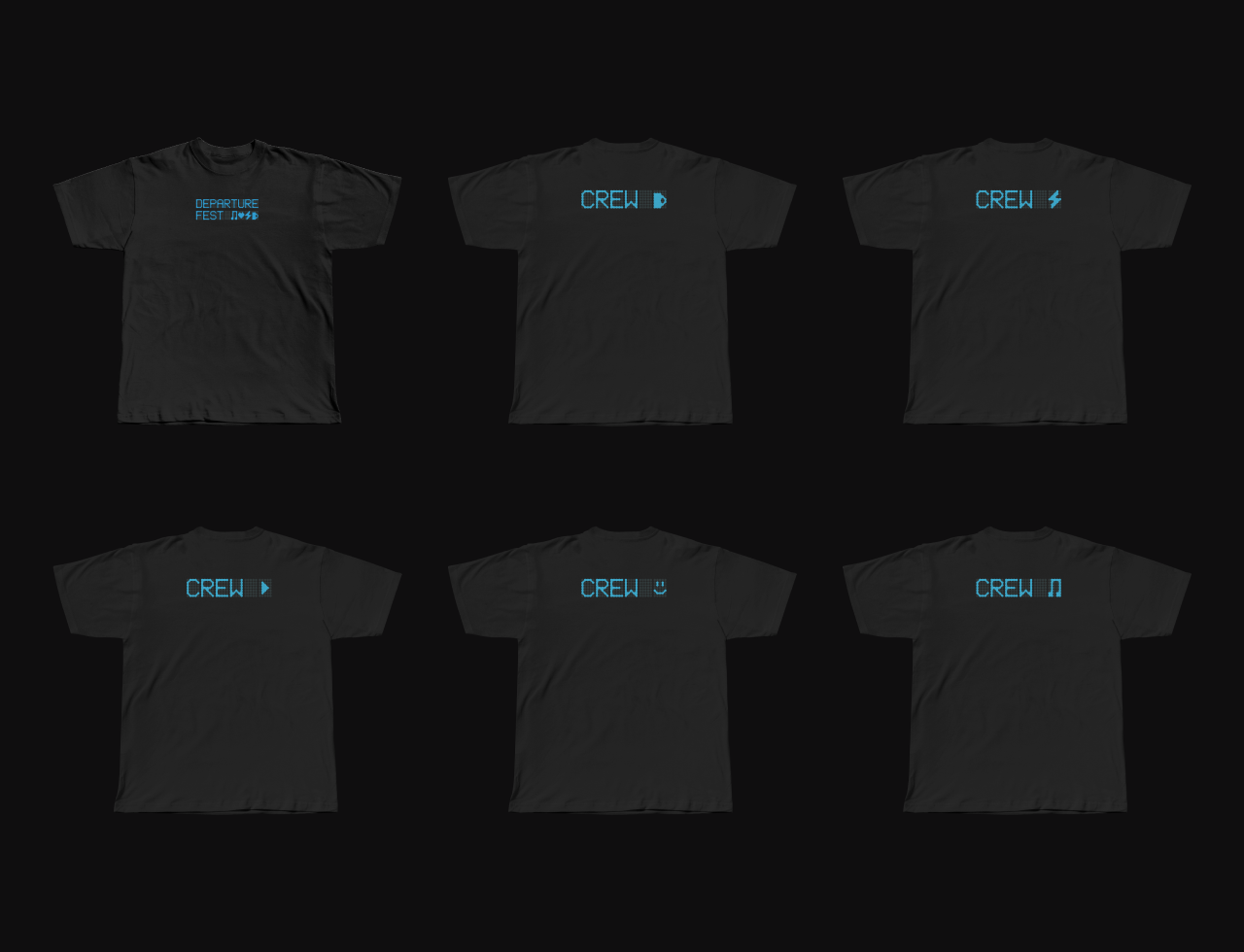
Outdoor signage draws directly from airport logic, using familiar travel cues to guide users through the space. Merchandise and collectible elements (such as a festival passport) extend the travel narrative, encouraging engagement and memory-making. Internal branding, including crew apparel with distinct icons, improves recognition and coordination across teams.
Conclusion
Departure Fest demonstrates how a strong conceptual foundation can unify branding, UX/UI, and physical experience into a cohesive system. By embracing the airport context as more than a backdrop, the project transforms the festival into a journey.
The biggest insight was understanding that branding systems must be both expressive and functional. When design supports real user needs (navigation, clarity, and flow) it elevates the experience rather than distracting from it. This project reflects a design approach where concept, scalability, and usability work together to create meaningful, memorable experiences.